
 Svenska
 Dansk
Dansk
 Suomi
Suomi
 Deutsch
 Polskie
 Français
 Nederlands
 Italiano
 Español

Hiking with a light pack has long been associated with expensive brand-name products and exclusive materials like dyneema. But a few years ago, something happened. A Chinese manufacturer called 3F UL Gear released the Lanshan 1 , and suddenly the dream of a lightweight tent under one kilo became available for a fraction of the price.
But is it just the price that attracts you, or does the tent hold its own when the wind whips across the bare mountain? As part of our series on hiking gear, we'll go over everything you need to know about the Lanshan 1 - from the differences between the models to the important work of seam sealing.
Why is Lanshan 1 so popular?
The answer is simple: weight-to-price ratio. The Lanshan 1 weighs in at around 900 grams (depending on version), which puts it in the same league as tents that often cost three to four times as much.
For those looking to reduce their pack weight, the tent is often the single biggest weight culprit. By swapping a traditional 2.5kg dome tent for a Lanshan 1, you immediately save 1.5kg. That’s a weight loss you’ll feel in your legs after 20km on the trail.
The Lanshan 1 is a so-called "trekking pole tent", which means it lacks its own tent poles. Instead, you use your trekking pole to brace the structure. This is functional logic at its best: why carry tent poles when you can walk with poles in your hands anyway?
A jungle of versions: Standard vs PRO
When you start watching the Lanshan series, you'll quickly notice that there are two main tracks. It's important to understand the difference before you jump in.
1. Lanshan 1 (Standard)
This is a classic double-wall tent. This means you have a separate outer tent and an inner tent.
- Pros: You can set up just the inner tent on warm, starry nights to keep out mosquitoes but still have a view. It handles condensation better because the moisture is trapped on the outer tent while you're protected behind the inner tent wall.
- Weight: Approximately 900g.
2. Lanshan 1 PRO
The PRO version is a single-wall tent (hybrid). Here, the inner tent and outer tent are glued/sewn together into one unit.
- Advantages: It is lighter and often perceived as more spacious inside because you don't have to worry about a separate inner tent. It is also faster to set up in the rain because the inside is never exposed.
- Cons: As with all single-wall tents, condensation management is more important. You need to be careful with ventilation to avoid waking up with a damp sleeping bag.

3-season or 4-season inner tent?
One of the most common questions we receive at HikingStore concerns the choice of inner tent for the standard model.
- 3-season inner tent: Consists largely of mesh. This provides maximum ventilation and is perfect for hiking during the summer and early fall. It keeps mosquitoes out but allows every little breeze to cool you down.
- 4-season inner tent: Here the mesh is replaced with a solid fabric wall (often 15D or 20D nylon) with only smaller ventilation panels in mesh. Important to know: This does not make the tent an expedition tent for polar nights, but the fabric blocks that cold draft that can occur on the bare mountains during late autumn or early spring. It provides a noticeably warmer environment inside the tent.
Our advice? If you mainly hike in the Swedish mountains during July and August, the 3-season version will suffice. However, if you are planning trips in September or like to sleep high up in exposed places, the 4-season version is a safer investment for your sleep quality.
The critical point: Seam Sealing
This is where Lanshan differs from many more expensive tents. To keep the price down, the tent is delivered with seams that are not taped at the factory in the most critical attachment points.
The product description for Lanshan 1 clearly states: the attachment points for the storm ropes need to be brushed with silicone.
Do this:
- Set up the tent outdoors on a dry day.
- Use a silicone-based sealant (e.g. Gear Aid Seam Grip +SIL).
- Brush on the seams and around the attachment points on the outside.
- Let dry for at least 3-4 hours (preferably longer) before packing up the tent.
Skipping this step is asking for trouble. In heavy rain, water will seep in through the attachment points via capillary action. Think of it as a ritual – spending 15 minutes sealing your tent will help you get to know its construction and ensure you stay dry when it matters.
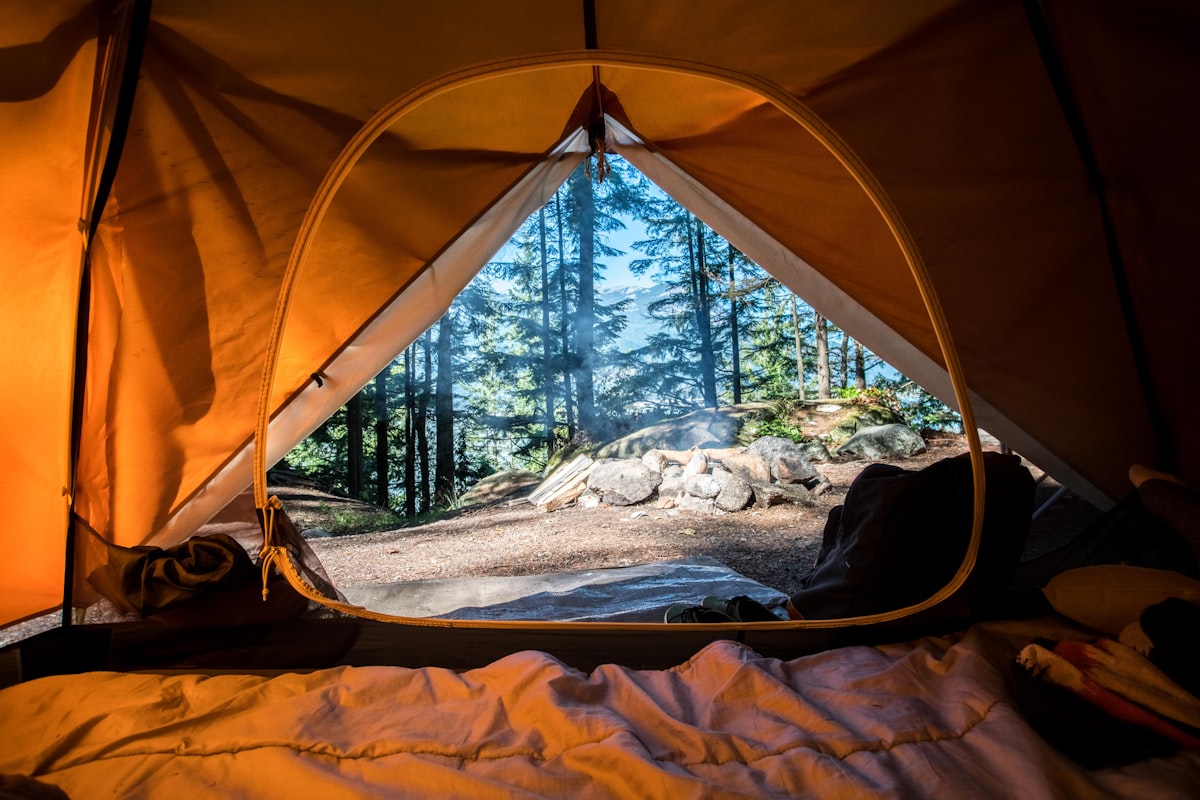
Set: The Art of Using a Walking Stick
The Lanshan 1 is a non-freestanding tent. This means it requires ground pegs and tension to stand up. You place your trekking pole (set to about 120-125 cm) in the middle of the tent.
This takes a little more practice than a regular dome tent. The first few times it may look a little "saggy", but the key is in the angles of the ground stakes. A tip is to always start with the four corners, make sure the floor is taut and rectangular, and then insert the pole.
Upgrades that make a difference
Although the Lanshan 1 is fantastic out of the box, there are a few small modifications that can elevate the experience:
- Ground stakes: The included stakes are fine, but for Swedish conditions with lots of rocks or loose soil it may be worth upgrading to some stronger V-stakes or Y-stakes . This provides a more secure anchorage when the wind picks up.
- Storm ropes: Some people choose to replace the ropes with more reflective versions to avoid tripping over them in the dark.
- Footprint: The Lanshan 1 has a 20D nylon floor. It is thin. If you often camp on sharp rocks or in rough terrain, we recommend a footprint to protect the floor from punctures.

Who is Lanshan 1 more for?
This is not the tent for those who want a spacious "living room" in the wilderness where you can stand up and change. It is a tent for those who see the equipment as a means to an end.
- The hiker: Who wants to go further and easier without spending an entire month's salary on a tent.
- Cyclist: The compact pack size (30x12 cm) makes it easy to fit into a bikepacking bag.
- The paddler: Who needs a small tent that can be squeezed in between the cargo hatches in the kayak.
Summary: The balance between weight and safety
The mountains rarely punish those who pack lightly, but they do punish those who pack foolishly. The Lanshan 1 balances that line perfectly. It is a technically competent tent that demands a little more from its user in the form of seam sealing and careful set-up.
Is it the most affordable lightweight tent on the market? Probably. It gives you the freedom of ultralight hiking without compromising on basic protection from the elements. But remember: a tent is only as good as its anchorage. Practice setting it up in your backyard before you head out on your next big expedition.
Are you ready to take the step towards a lighter backpack? Here you will find the Lanshan 1 in our range.