
 Svenska
 Dansk
 Suomi
 Deutsch
 Polskie
 Français
 Nederlands
 Italiano
 Español
 Norsk

In the autumn mountains, the difference is noticeable between a kitchen that works in the lee and one that can be used when the wind picks up. But what does storm kitchen really mean in tests when a kitchen should be easy to carry, stable on uneven ground and reliable in the cold?
We do not have our own test data, laboratory results or measured cooking times. Therefore, we do not designate a product winner and do not give any ratings. Instead, we describe seven kitchen types or configurations and what they are best suited for. The selection is based on established design principles and published tests and guides from, among others, Testfakta , Råd & Rön and Utemagasinet . The tests apply to different kitchens and conditions – they are not a direct test of the seven types below.
A complete storm kitchen is a system where the burner, wind shield and cooking pots are designed to work together. A separate burner is instead combined with its own pots and possibly a separate wind shield. The difference affects stability, wind sensitivity and how much heat reaches the pot.

What determines whether the kitchen works in the autumn mountains?
The windscreen affects both cooking time and fuel consumption. An integrated screen can reduce heat loss in the wind. A loose screen must fit the kitchen and be used according to the manufacturer's instructions. Incorrect screening can create dangerous heat or block the air supply.
Fuel behaves differently in the cold. Gas pressure drops as the container gets cold. Liquid fuel works in severe cold, but typically requires preheating and more handling. Alcohol is simple and relatively insensitive to cold, but slow.
The pot plays a big role. A lid reduces heat loss. A heat exchanger in the bottom of the pot can also affect efficiency. Råd & Rön's test of gas stoves showed clear differences in wind; stoves with heat exchangers and integrated wind protection maintained performance better than several open burners. The results apply to the tested models and test conditions.
Also consider the center of gravity: top-mounted stoves are often lightweight, but can become wobbly with large pots. Hose-mounted stoves sit lower and are often better suited to larger pots. Cold fingers make piezo igniters less reliable, so pack a spare igniter or a lighter. Consider whether you need to cook in two pots at once and how easy the stove is to clean in the field. The balance between light weight and reliable use is more important than optimizing a single detail.
Seven kitchen types that win in different situations
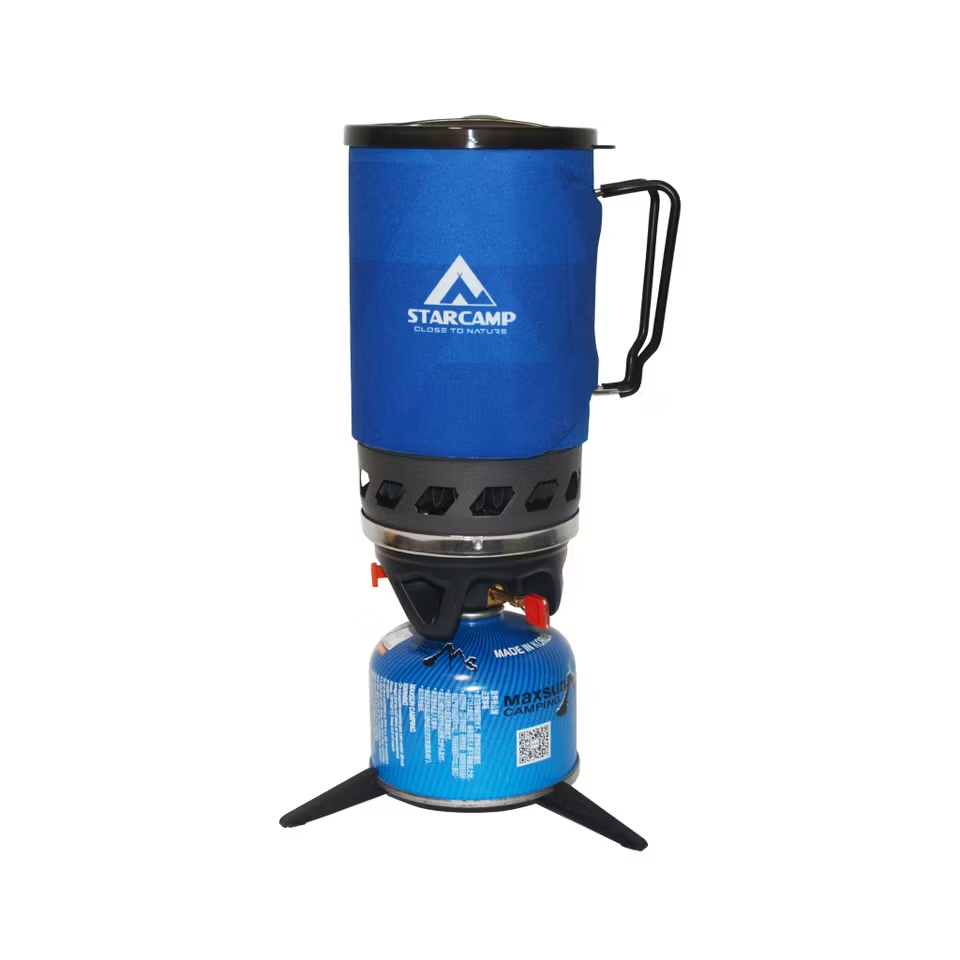
1. Integrated gas system with wind protection
Wins when: You want to boil water quickly on a typical fall hike and expect wind but not prolonged severe cold. Burner and vessel are matched to each other, which can reduce heat loss.
Loses when: The temperature drops so much that the gas pressure is not enough. Also check what the system allows before using extra wind protection or other containers. This type can be suitable for three seasons and autumn trips with moderate cold, but it is not automatically a winter kitchen.
2. Hose-mounted gas or multi-fuel stove with preheating rail
Wins when: You want a lower center of gravity, use a larger pan, and have more fuel choices. A preheat rail directs heat to the fuel. Some models also allow liquid feed from the gas tank, but only if the manual explicitly states so.
Loses when: You prioritize easy handling and low pack weight. Hose, support legs and more parts take up space and need to be checked. Practice the starting procedure at home and always follow the instructions for your particular kitchen.
3. Multifuel stove for liquid fuel
Wins when: The ride is in extreme cold, is long, or requires you to melt a lot of snow. It's an option when regular gas isn't reliable enough.
Loses when: You don't want to deal with preheating, soot, noise, and maintenance. Liquid fuel stoves require practice and careful handling. For a short fall trip, the added complexity may be unnecessary.
4. Top-mounted gas stove
Wins when: You're going on a weekend trip alone or with two people in mild weather and want to keep the weight down. Few parts make the kitchen easy to pack and set up.
Loses when: It is very windy, it gets cold or you use a large pot. The high position provides less stability than a low hose-mounted stove. Only use a wind shield if the manufacturer approves it for the stove.
5. Alcohol stove
Wins when: You prioritize simple construction, quiet operation, and a kitchen that doesn't rely on gas pressure. It may be suitable for leisurely trips where slower cooking doesn't interfere with planning.
Loses when: You are short on time or need to boil a lot of water. Expect longer boiling times and higher fuel consumption per liter of water compared to an efficient gas system under favorable conditions. The flame can be difficult to see; never fill a burner that is still hot.
6. The Trangia kitchen as a system
Wins when: Stability and wind protection are important. The wind protection and pans are part of a cohesive system, which is suitable for cooking for several people and can provide a stable kitchen on a suitable surface. It can be used with different burner types depending on the configuration.
Loses when: You want light weight or fast water boiling compared to efficient gas systems. Choose burners based on the temperature of the trip, water needs and experience – the stability of the system does not remove the limitations of the chosen fuel.
7. Wood stove
Wins when: You are walking in the forest where dry, permitted fuel is available and want to reduce the amount of fuel you carry. As a complement, it can work well when the conditions are right.
Lose when: You are above the tree line, the ground is wet or there is a fire ban. Wood stoves rely on dry fuel and open fires may be subject to local regulations. Always check what applies, especially in nature reserves and national parks. The Swedish Environmental Protection Agency explains safe burning and fire bans .
Kitchen in the cold: some practical routines
Keep the gas container warm before use, but never heat it with an open flame or other direct heat source. Preheat hose-mounted stoves only according to the manual. Use a lid and place the stove on a flat, stable surface. Expect longer cooking times and higher fuel consumption than in mild weather. Read our guide on emergency stoves in the cold and why gas fails for more advice on cold weather.
How to test your own kitchen before the trip
Test at home before you have to rely on the kitchen in the wind and cold. Write down the results so that fuel planning is based on your own conditions instead of guesswork.
- Measure the time it takes to heat one liter of water from a given starting temperature – both in lee and wind.
- Weigh the gas tank before and after to estimate fuel per liter of water.
- Check the stability with the pan you actually intend to use.
- Try lighting with gloves and cold hands, after the kitchen has been cold.
- On a winter trip: measure the time and fuel consumption to melt snow into one liter of water.
Snowmelt is often the biggest fuel expense. Calculate the fuel per liter and multiply by the number of liters you need per day. Then add a reserve for snowmelt, wind, and worse-than-expected conditions. Think through the balance between the amount of fuel, the weight of the stove, and the margin you need.
Safety: windbreak and carbon monoxide
Never use a stove in a closed tent. Carbon monoxide is odorless and invisible, and combustion can produce the gas. Do not place a windbreak so that it blocks the flame or rests against the gas container. Tukes warns that windbreaks can contribute to dangerously high carbon monoxide levels. Check hoses and fittings if you suspect a leak; use soapy water, never a flame. Handle liquid fuel carefully and only refill when the stove has gone out and cooled down, away from other flames. For more on safety, see the carbon monoxide section in our guide to camping in the cold .

Choose according to your luck – and practice before you go
The best stove is the one that stands up to your luck, not the one that wins someone else's test. Choose according to season, wind, fuel availability, group size and how many liters of water you need to boil per day. Practice with the stove before you set off and plan for changing weather. See our range of stoves to compare options.
Sources and further reading
- Test facts: Best storm kitchen
- Advice & Findings: Gas Stove Test
- Utemagasinet: Test of kitchens for outdoor life and adventure
- Outdoor magazine: Test of fast and easy gas stoves
- Wilderness School: Storm kitchen and liquor kitchen
- XXL: Choose the right burner and stove
- Swedish Environmental Protection Agency: Burning
- Tukes: Warning about windbreaks and carbon monoxide
- HikingStore: Storm kitchen in the cold , Storm kitchen vs gas kitchen , Gas or alcohol kitchen for hiking and How to choose the best storm kitchen .