
 Svenska
 Dansk
Dansk
 Suomi
Suomi
 Deutsch
 Polskie
 Français
 Nederlands
 Italiano
 Español
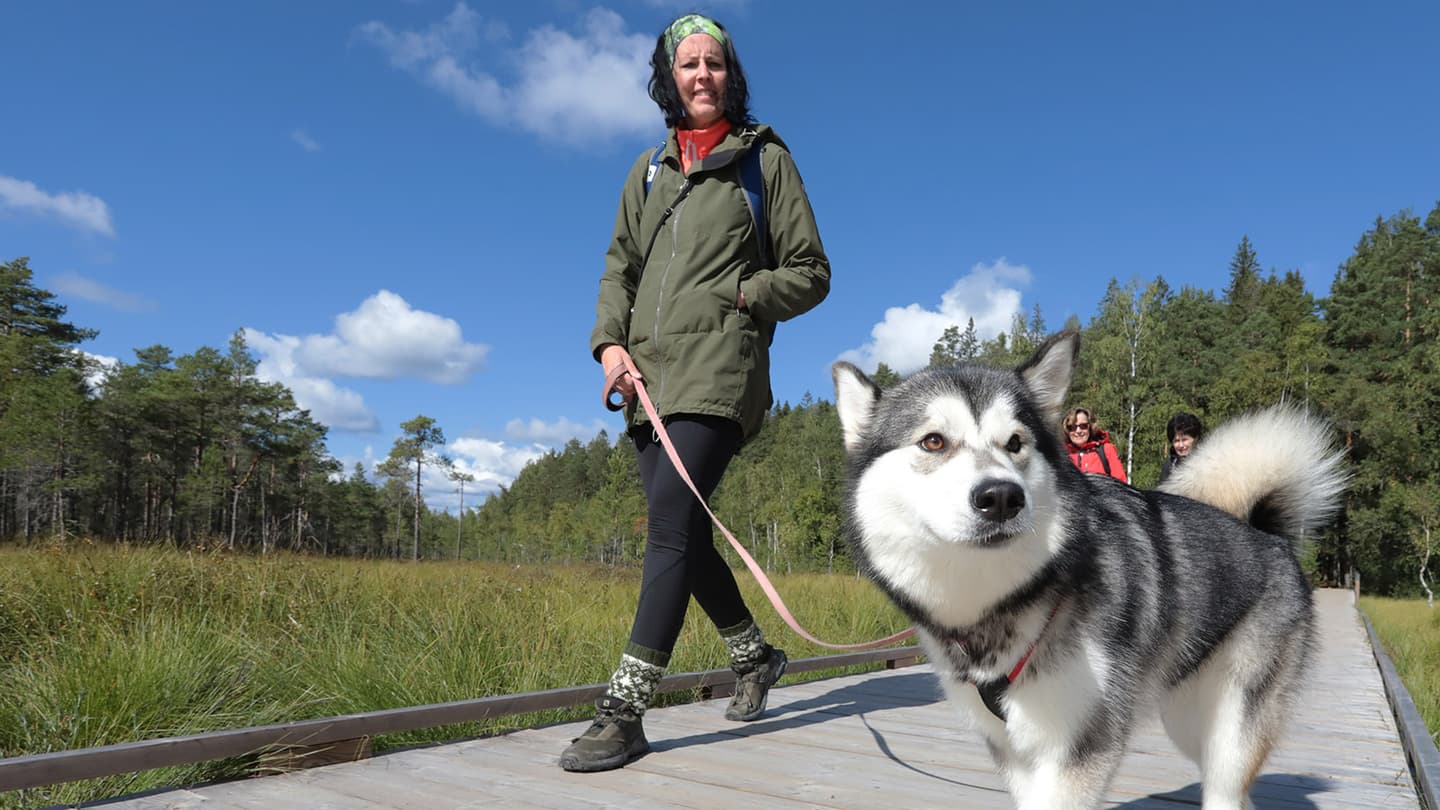
Southwest Finland, or Varsinais-Suomi in Finnish, is located in southwestern Finland and is a landscape where the hikes quickly change character. A tour can go over open marshes and old growth forest. The next can follow a coast with polished rocks, grove vegetation and ferries between the islands.
This is the third article in HikingStore's series about hiking in the Finnish countryside, after Åland and Uusimaa. Here we focus on seven concrete nature experiences. Always check the current trail status, maps, weather, forest fire warnings and transport connections before setting off.
1. Kurjenrahka and Kuhankuono – bog, old-growth forest and marked trails
Kurjenrahka National Park is one of the best areas in Southwest Finland to experience bog landscapes without having to plan a long mountain hike. Boardwalks lead over sensitive wetlands, while the forested areas provide firmer and more hilly terrain.
Kuhankuono has the Savojärvirundan trail, which is about 6 kilometers long, Karpalopolku, Pukkipalo and Vajosuo. The official information also describes longer trails, some of which connect to the Kuhankuono trail network, which is about 150 kilometers long. So you don't have to choose between a short family trip and a multi-day hike. The area can be adapted to the group's strength and the weather.
For beginners, Savojärvi or a shorter trail at Kurjenpesä are reasonable options. Those who want to hike further must expect varying terrain, limited service and the need to be able to read a map.
It is also possible to get to Kuhankuono with some departures on Föli routes 21 and 23 from Turku. Föli indicates the stop Kuhankuonon P-alue and describes the seasonal variations of the current traffic. Check the timetable on the day you plan your trip. Not all buses on the routes continue to the national park.
2. Vaskijärvi – strict nature reserve with a real wilderness feel
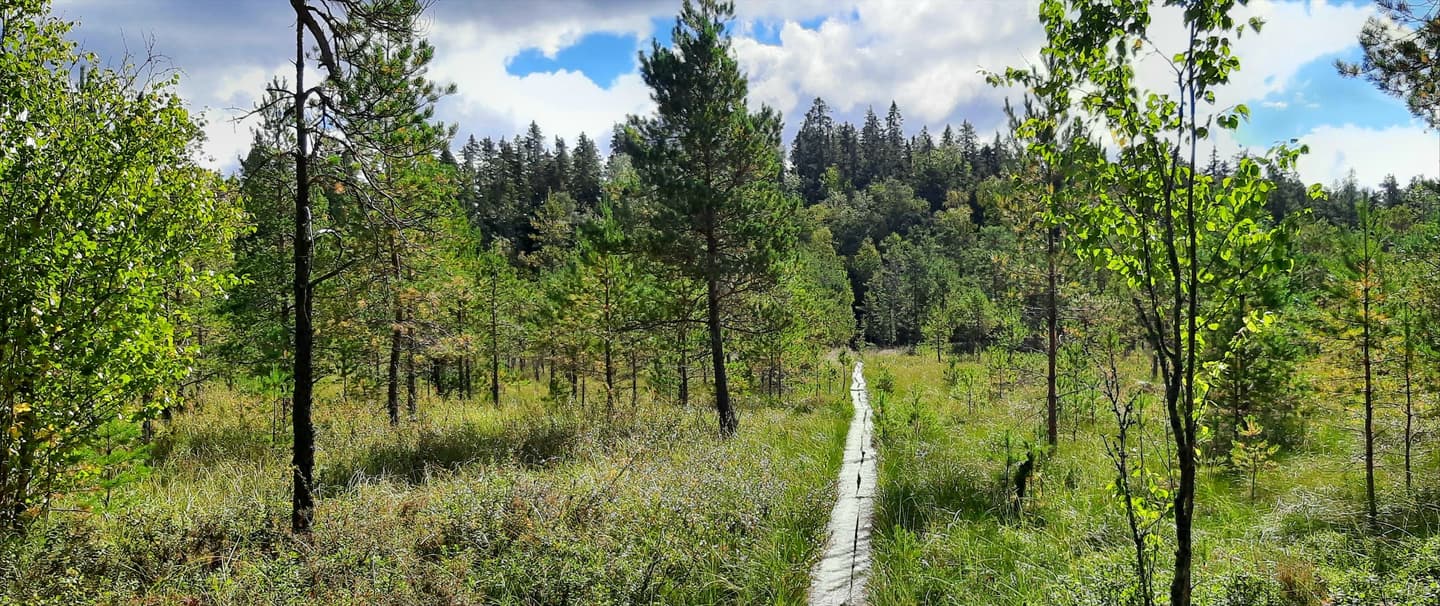
Vaskijärvi Strict Nature Reserve is located next to Kurjenrahka but requires greater respect for the rules. Here, raised bogs, forested mainland islands and small lakes dominate. The area is one of the most wilderness-like in southwestern Finland.
This is not a place for spontaneous off-road hiking. In a strict nature reserve, the right of access does not apply in the same way as outside the reserve. You may only move along the designated trails. Camping and lighting fires are prohibited inside the reserve. Dogs must be kept on a leash.
Vaskijärvi is therefore best suited to experienced hikers who have read the regulations and planned the day in detail. Bring enough water and a packed lunch. Do not count on waste containers or service along the trail. Anyone who wants to spend the night needs to check exactly where the reserve borders are and choose a permitted spot outside the reserve.
It's a clear example of why a beautiful natural environment shouldn't always be treated as open terrain. The balance here is simple: the experience is better when you follow the rules that protect the area.
3. Lenholmen nature trail – short grove walk near Pargas
Lenholmen Nature Trail in Pargas is an alternative when you want to experience nature without planning a full day trip. The officially stated length is 1.3 kilometers.
Grove environments provide a different hiking experience than bogs and coniferous forests. The path runs through lusher vegetation and is suitable for a quiet nature walk, photography or as part of a day where several places in Pargas are combined.
The terrain is short, but that doesn't automatically mean it's completely problem-free. Roots, moisture and slippery areas can occur. Wear shoes with good grip even on short trails. Bring water if you continue on, as a short nature trail doesn't necessarily have drinking water or other services.
4. Örö – archipelago hike with cliffs and military history
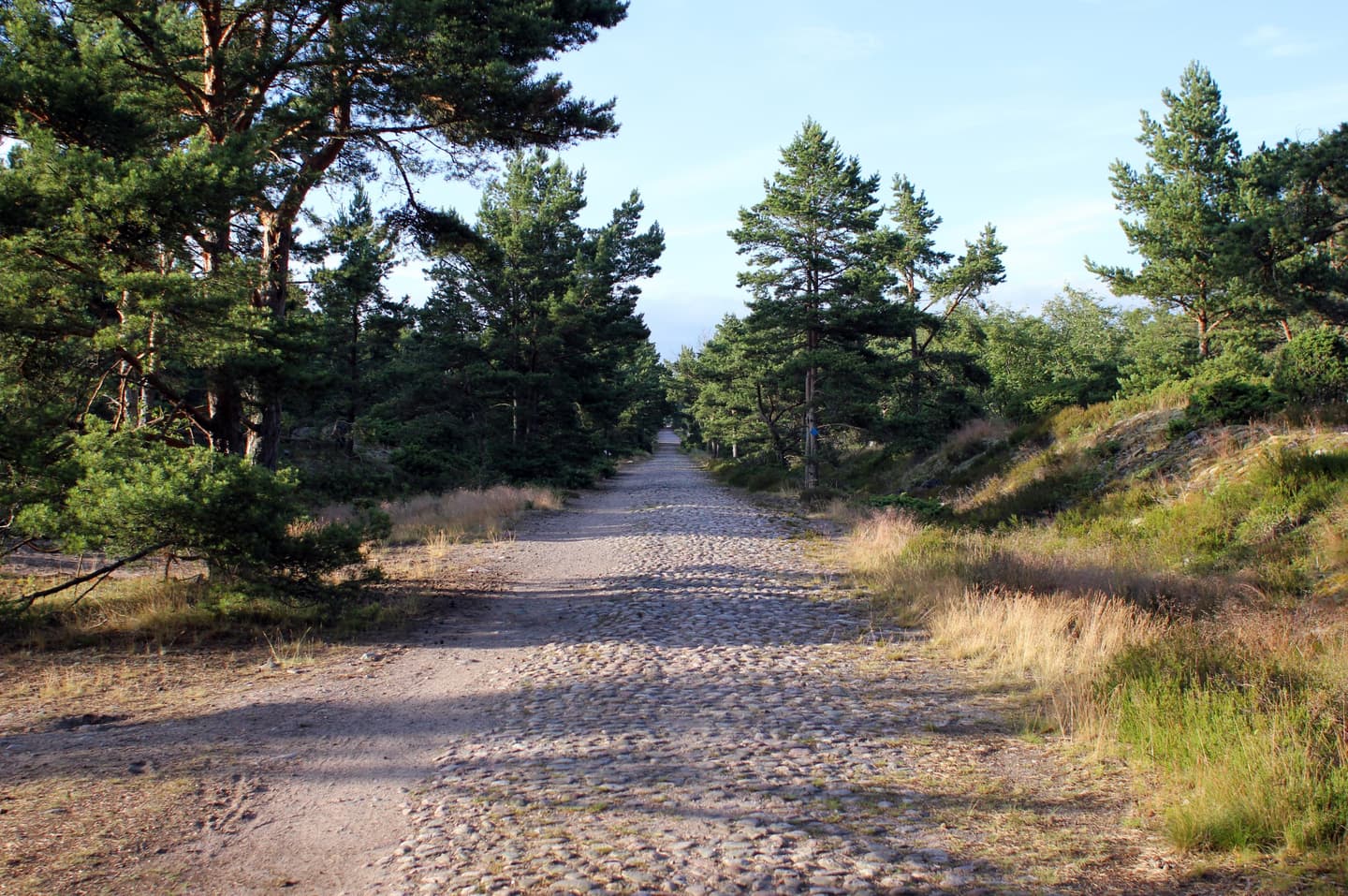
Örö is a concrete road into the Archipelago Sea National Park . The island has two marked circular trails, including the 120 mm round and the 6-inch round, as well as older cobblestone roads that can be used for walks. Here you will encounter coastal nature, open pastures, pine forests and military remains.
Örö is suitable for day hikers who want a clear trail structure, but also for hikers who want to stay overnight. The island requires more logistics than a forest tour on the mainland. Boat transport must be planned in advance. Check the departure port, timetable, return journey, possible booking and which services are actually open when you get there. Summer traffic and service may change between seasons.
Wind is often an underestimated factor. A sunny day on the mainland can feel raw and exposed out on the island. Pack a windbreaker, layers and rain gear even if the weather forecast is stable. Wet rocks are slippery. Go slowly, especially near the shoreline and on smooth ledges.
5. Matildanjärvi in Teijo – an easily accessible national park tour
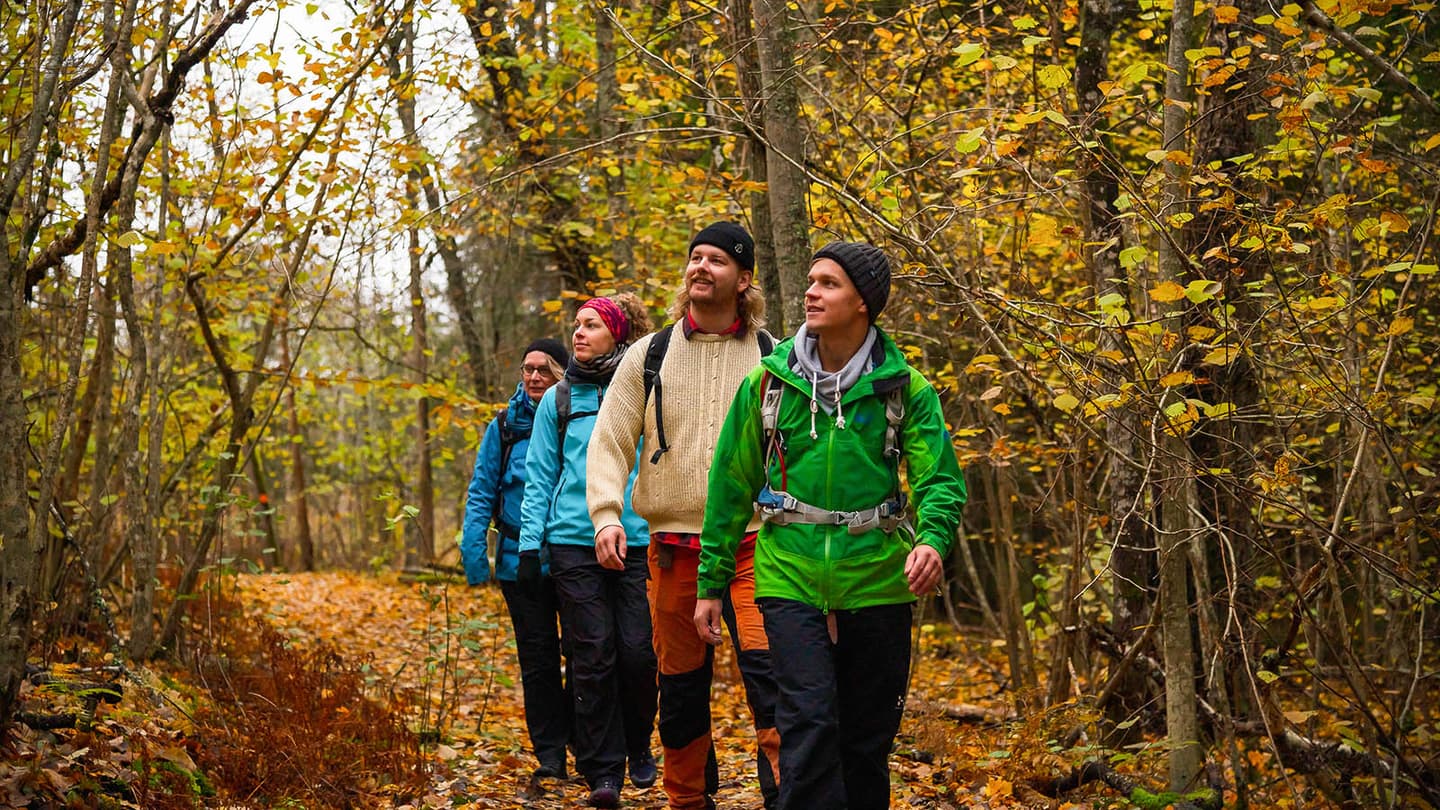
Teijo National Park is a good choice when the group wants to have several levels of ambition in the same place. According to Metsähallitus information about Teijo, there are about 50 kilometers of marked trails.
At Matildanjärvi there are shorter trails suitable for families and day hikers. The official Lake Matildanjärvi Trail is 6.1 kilometers. The landscape consists of a lake, pine forest and wetter areas. The proximity to parking and the nature center makes the area practical for those who want to start gently.
Here you can also practice good hiking planning. Bring water, a packed lunch and a first aid kit even if the trail is easily accessible. On wet ridges and rocks, stable shoes are more important than low weight. Also check the rules about fires and camping. In Teijo, camping is allowed at designated service areas and fires may only be made at marked fire pits. Fires may be prohibited during a forest fire warning.
6. Sahajärvi – longer and more demanding Teijo
For a more physical hike in the same national park, the Sahajärvi Trail is a definite step up. The official length is 8.3 kilometers. Teijo's longer trails pass through forests, bogs, lakes, streams and rocky sections. The terrain can therefore feel considerably more demanding than the distance suggests.
Sahajärvi is suitable for experienced day hikers and beginners who already have some experience of uneven terrain. Add margin for breaks, wet sections and slower pace when it rains. A map on your mobile phone is not always enough if the battery runs out or the signal disappears between the forest and the mountains. Download the map offline and feel free to bring a paper map as a backup.

If you are planning to stay overnight, you need to check the current camping site, water and fire facilities. Do not choose a sleeping system based solely on pack weight. A sleeping pad that is too thin will lead to cold ground and poor recovery, especially when the night gets damp. Please read HikingStore's guide on bird down in sleeping bags and then compare sleeping bag, sleeping pad and tent as a whole.
7. Vaisakko – groves, oaks and coastal nature near Salo
Vaisakko Nature Trail is located by Viurilanlahti Bay on the western shore of Halikkolahti Bay. The area consists of mountainous forests, groves and broad-leaved forests with large oaks. Spring is especially interesting when the grove plants are in bloom, but the environment also works well for mushroom and color experiences in autumn.
The total route is approximately 4.3 kilometers, of which the nature trail is approximately 2.5 kilometers according to Visit Salo. The starting point is Palttatie 22c. This makes Vaisakko suitable for a half-day trip for those who want to experience a more deciduous nature type than the coniferous forests of Teijo.
Coastal groves can also be damp and slippery. Ticks are present in the region. Wear long pants when appropriate, check your body after the hike, and pack tick removers. Dogs should be kept on a leash, both to protect wildlife and to reduce conflicts with other visitors.
Practical packing for Southwest Finland
Start with the nature of the trip, not the advertised weight of the equipment.
- Day trip on marked trail: stable hiking shoes, rain and wind protection, water, packed lunch, offline map, charged phone and first aid.
- Cliffs and archipelago: shoes with good grip, windproof layer, extra socks and rain protection. Wet cliffs require caution, not a faster pace.
- Bogs and wet forests: footbridges can be slippery. Take poles if balance or knees need support.
- Overnight stay: first check if camping is allowed. Then choose a backpack , tent , sleeping pad and sleeping bag. Bring a charger, headlamp, water capacity and repair materials.
- Archipelago islands: plan your return trip as if it were part of your safety equipment. A missed boat can mean many extra hours out.
The right of public access does not apply unlimitedly in national parks and nature reserves. Always read the area's regulations. Keep your dog on a leash, only make fires where permitted, take all waste with you and do not leave any new trails behind you.
Southwest Finland rewards those who plan according to weather, terrain and transport. The best equipment is not the lightest in all situations. It is the one that works when the wind picks up, the rocks get wet and the trip takes longer than expected.