
 Svenska
 Dansk
Dansk
 Suomi
Suomi
 Deutsch
 Polskie
 Français
 Nederlands
 Italiano
 Español


Cart
Your cart is empty, but doesn't have to be..
Here is an FAQ section tailored to answer customers' most common questions about sleeping pads:
1. What does R-value mean and which one do I need?
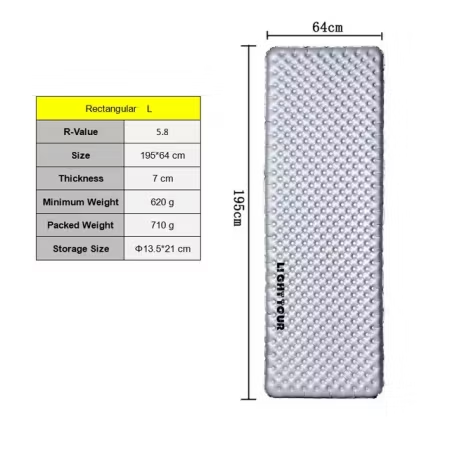
The R-value measures the ability of a sleeping pad to insulate you from the cold ground. The higher the number, the warmer the pad.
2. Inflatable or foam plastic – which is best?
It depends on your priorities!
3. How do I avoid punctures on my inflatable sleeping pad?
Always clear the ground of sharp twigs and rocks before setting up your tent. It is a good idea to use a "footprint" (ground protection) under your tent. Should an accident occur, most surfaces are easy to repair with a small patch and glue.
4. Do I need a wide sleeping pad?
The standard width is often around 52 cm. If you move a lot while sleeping or find that your arms end up outside, we recommend a "Large/Wide" model (often around 63-65 cm wide). It weighs a few grams more but provides significantly better sleep.
5. How do I inflate the base without getting moisture in?
Use a pump bag (schnozzel bag) if it is included or available for purchase. It is faster than blowing with your mouth and you avoid getting moist exhaled air into the substrate, which can lead to mold or reduced insulation capacity in the long run.
Your cart is empty, but doesn't have to be..